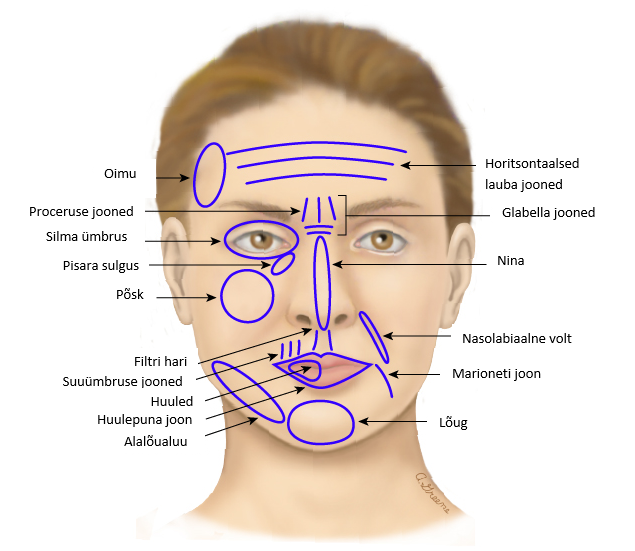

What is facial volume treatment?
Facial volume treatment is a non-surgical method for restoring a youthful appearance, replacing lost soft tissue volume and smoothing deeper lines.
Facial aging is associated with several changes:
Loss of skin elasticity and changes in skin tone,
Redistribution and reduction of subcutaneous fat,
Thinning of facial bones.
Volume procedures help correct these changes and restore natural facial contours.
Who is facial volume treatment suitable for?
It is indicated for:
Filling wrinkles and folds,
Restoring facial contours and adding volume,
Correcting scars (including acne scars and scars after trauma or surgery),
Reducing facial asymmetry.
Types of fillers
The most commonly used injectable preparations are based on hyaluronic acid:
A natural-looking result that integrates well with the tissue,
Slow absorption over time,
A reversible effect (the result can be dissolved if needed).
For a long-lasting outcome, repeat treatments may be necessary.
Scar correction
The procedure helps improve:
Small atrophic acne scars,
Scarring after removal of skin lesions,
Trauma-related scars.
They also improve the overall texture and smoothness of the skin.
Correction of facial asymmetry
They are also used for congenital or acquired facial asymmetries, such as:
Fat loss following trauma,
Parry–Romberg syndrome (hemifacial atrophy),
Scleroderma.
Contraindications
The procedure is not suitable if:
Inflammation or infection at the injection site,
Allergy to filler components,
Pregnancy or breastfeeding (safety has not been proven).
Pre-treatment recommendations
Vältida hüübimist mõjutavaid ravimeid ja aineid (aspiriin, verevedeldajad, E-vitamiin, liigne alkohol) vähemalt 1–2 nädalat enne protseduuri.
This will reduce the risk of bruising.
Aftercare recommendations
Avoid excessive pressure on the treated area.
Refrain from intense facial expressions and strenuous physical activity.
Sleep with your head slightly elevated.
Regular skincare (creams, makeup) can be resumed 24 hours after injections.
Avoid sunbathing and strong UV exposure for at least 2 weeks.
Recovery and results
Mild swelling or bruising may occur after the procedure but usually resolves within a few days.
Results are visible immediately and become more natural over the following weeks.
Depending on the type of filler and individual factors, results typically last 12–18 months.